Growing UX Maturity
Crafting the conditions for design to scale.
About the project
UX maturity was low across teams and stakeholders. Design was often seen as execution support rather than a strategic partner. This work focused on growing design capability, clarity, and influence across a large, multi-team government environment.
Role
- Senior UX Designer
- DesignOps Lead
- Mentor and facilitator
Focus
- DesignOps
- UX maturity and capability building
- Team growth and alignment
Outcome
Design became more visible, more trusted, and more influential. UX maturity increased measurably over time. Designers gained clearer roles, growth paths, and impact. Design shifted from reacting to requests to shaping the right problems.
Project Overview
This effort took place within a large Agile release train supporting a government agency. Multiple teams, vendors, and products operated with inconsistent design practices and a limited shared design language. We approached UX maturity as a design problem.
The Challenge
- Inconsistent UX design engagement across product teams
- Siloed design processes
- A lack of shared understanding about design value
- No design system foundation
When I started working with this agency I noticed several interconnected problems:
Without addressing these problems our team effectiveness and product outcomes would be limited.
The Approach
We applied a multi-pronged approach to maximize our ability to mature with speed, scale, and depth in a sustainable way.
Make design visible
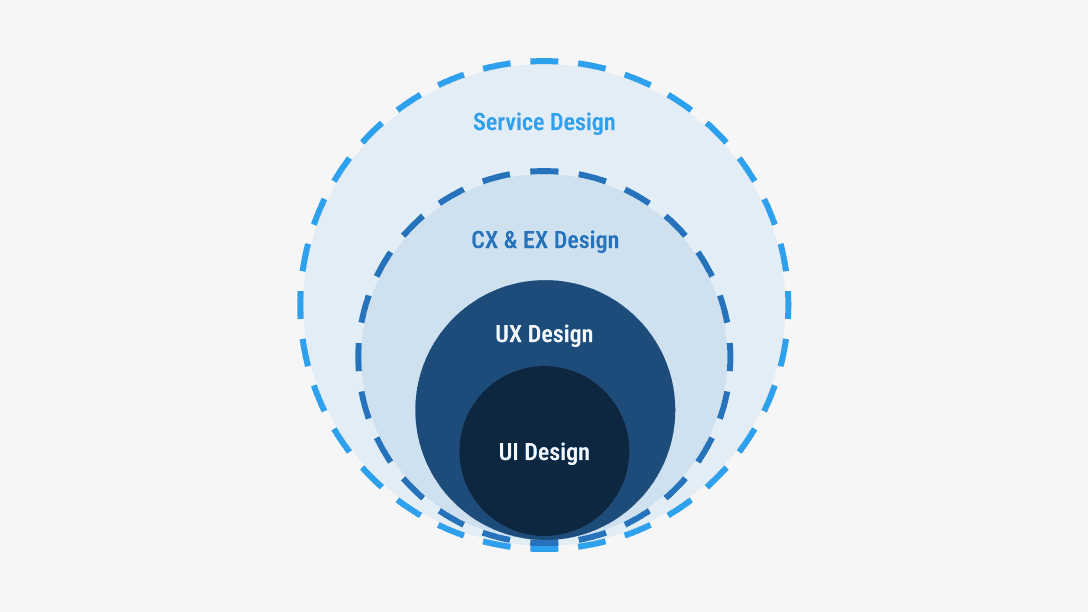
We introduced maturity models and a shared language to show what good design looked like at different levels.
Grow team capability
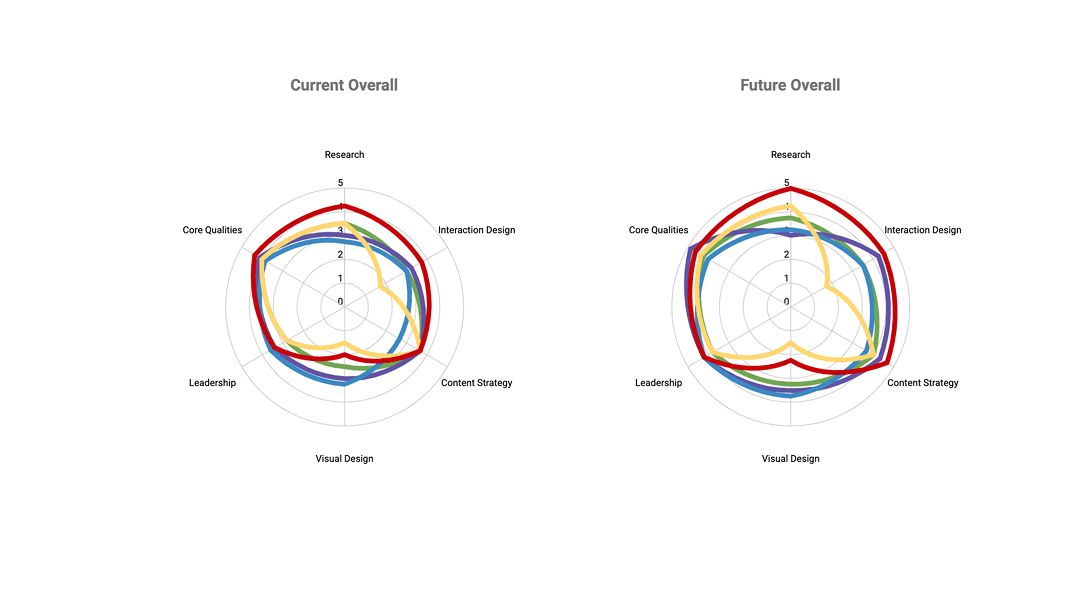
We mapped skills across the design team to identify strengths, gaps, and growth opportunities.
What this enabled
We started treating growth as a system rather than a one-time effort.
Align with delivery
Design practices were embedded into existing Agile workflows rather than layered on top. The focus was improving how design showed up in the work, not adding process.
What Changed
- Earlier and more consistent design involvement
- Better stakeholder questions, not just requests
- Clearer ownership and confidence among designers
The organization shifted from viewing design as a nice-to-have to seeing it as a core business capability. Engineering teams asked design questions upfront, product decisions were grounded in user research, and cross-functional collaboration became the norm.
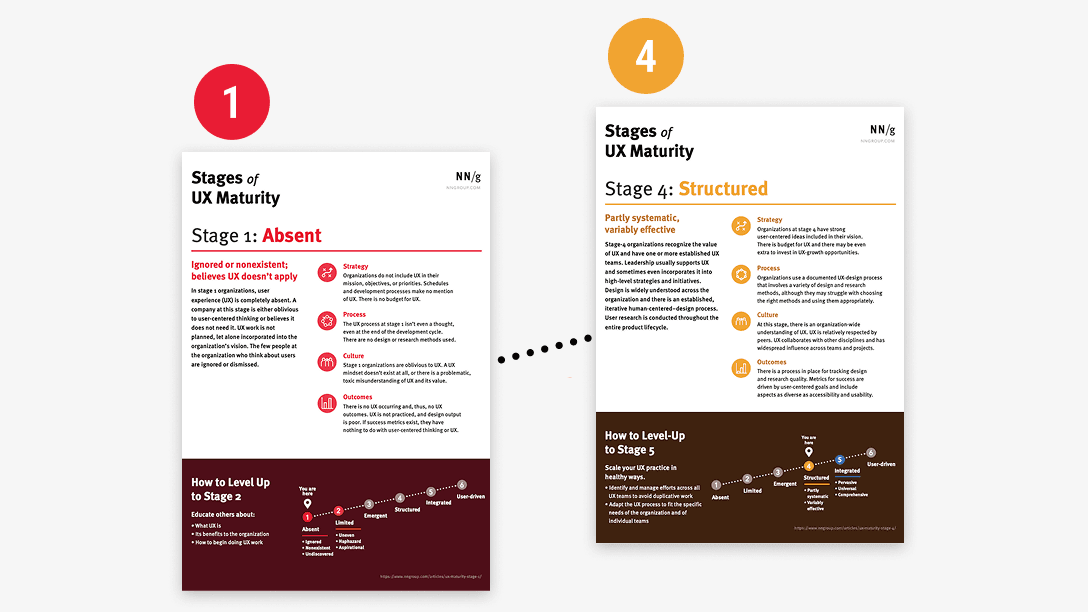
We increased UX maturity across teams and leadership.
Why This Matters
Good design starts with shared understanding: alignment on values, goals, and language. It requires intentional systems: processes and practices that scale. And it demands investment in people: growing capability and confidence. By focusing on maturity we created the conditions for better design to happen repeatedly and at scale. Growing UX maturity requires intentional investment in culture, process, and capability. Organizations that successfully mature their UX capabilities see tangible benefits in product quality, team efficiency, and user satisfaction.