System & Service Design
Redesigning a suite of government applications through holistic system architecture.
About the project
Redesigning a suite of government applications through a holistic approach to system design. This project leverages a comprehensive design system and UI component library while thinking strategically about the entire system architecture, user workflows, and organizational impact across multiple applications.
Role
- Lead Product Designer
- Design Lead
- System Architect
Focus
- System Design
- Design Systems
- Information Architecture
- User Workflows
Outcome
Created a cohesive experience across multiple applications. Reduced user confusion and training time. Improved cross-application workflows and data consistency. Established a reusable design system that accelerated future development.
Project Overview
This project involved redesigning multiple interconnected government applications that served thousands of users across different agencies and departments. The applications operated in silos with inconsistent patterns, terminology, and workflows.
The Challenge
Multiple applications had grown independently with inconsistent design patterns, terminology, and user workflows. Users struggled to transfer knowledge between applications. Developers duplicated work across codebases. There was no shared language or design standards across the suite.
The Approach
We mapped all user workflows across applications to identify opportunities for consolidation and consistency. We created a comprehensive design system with reusable components and patterns. We redesigned each application to use the new system while respecting unique user needs and workflows.
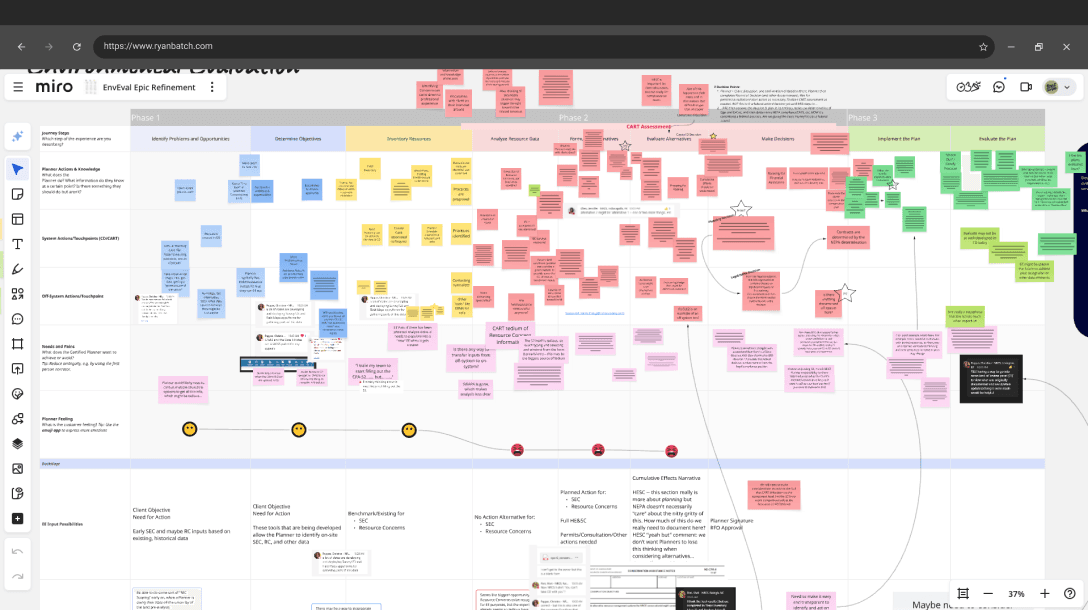
Map the system
We visualized the full service ecosystem to reveal relationships, handoffs, and breakdowns.
This made the invisible visible.
Design for orchestration
Rather than redesigning individual moments, we focused on how experiences connected.
The work shifted from what my team owns to what the user experiences.
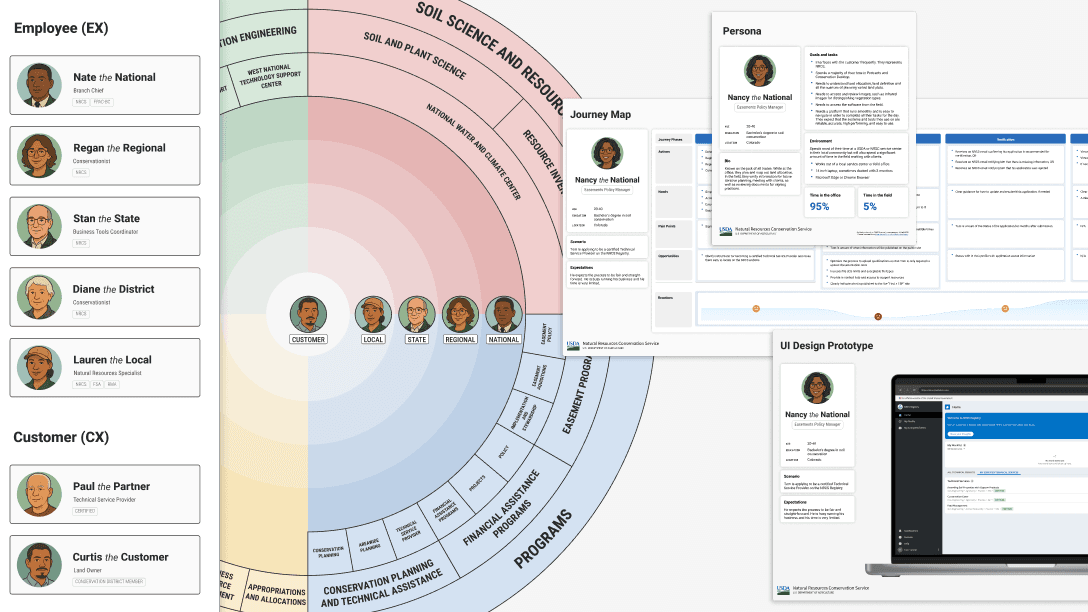
Enable better decisions
Artifacts were designed to be used, not admired.
They supported:
Design became a tool for alignment.
What Changed
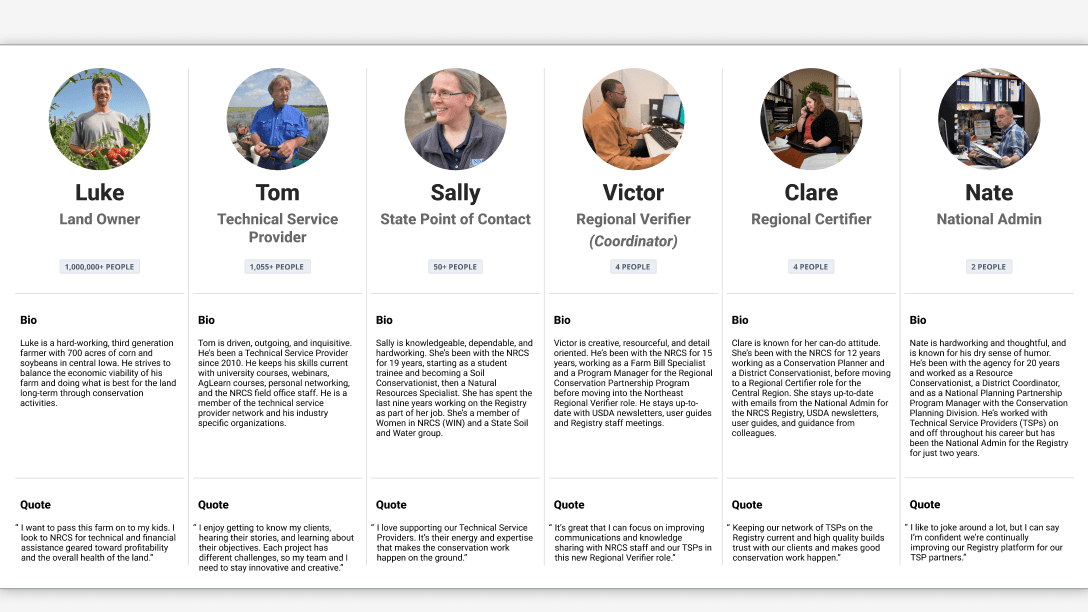
Users experienced reduced cognitive load when switching between applications. Training time decreased significantly. Development velocity increased through component reuse. Support tickets related to user confusion decreased. The design system became a reference for future development.
Why This Matters
Coherent system design improves user efficiency and satisfaction. Consistency across applications builds user confidence and reduces errors. A strong design system enables teams to move faster and maintain quality. Strategic thinking about the entire system prevents fragmented solutions.